

Ovarian Cancer Awareness Month: Understanding the Signs, Risks and Treatment Options
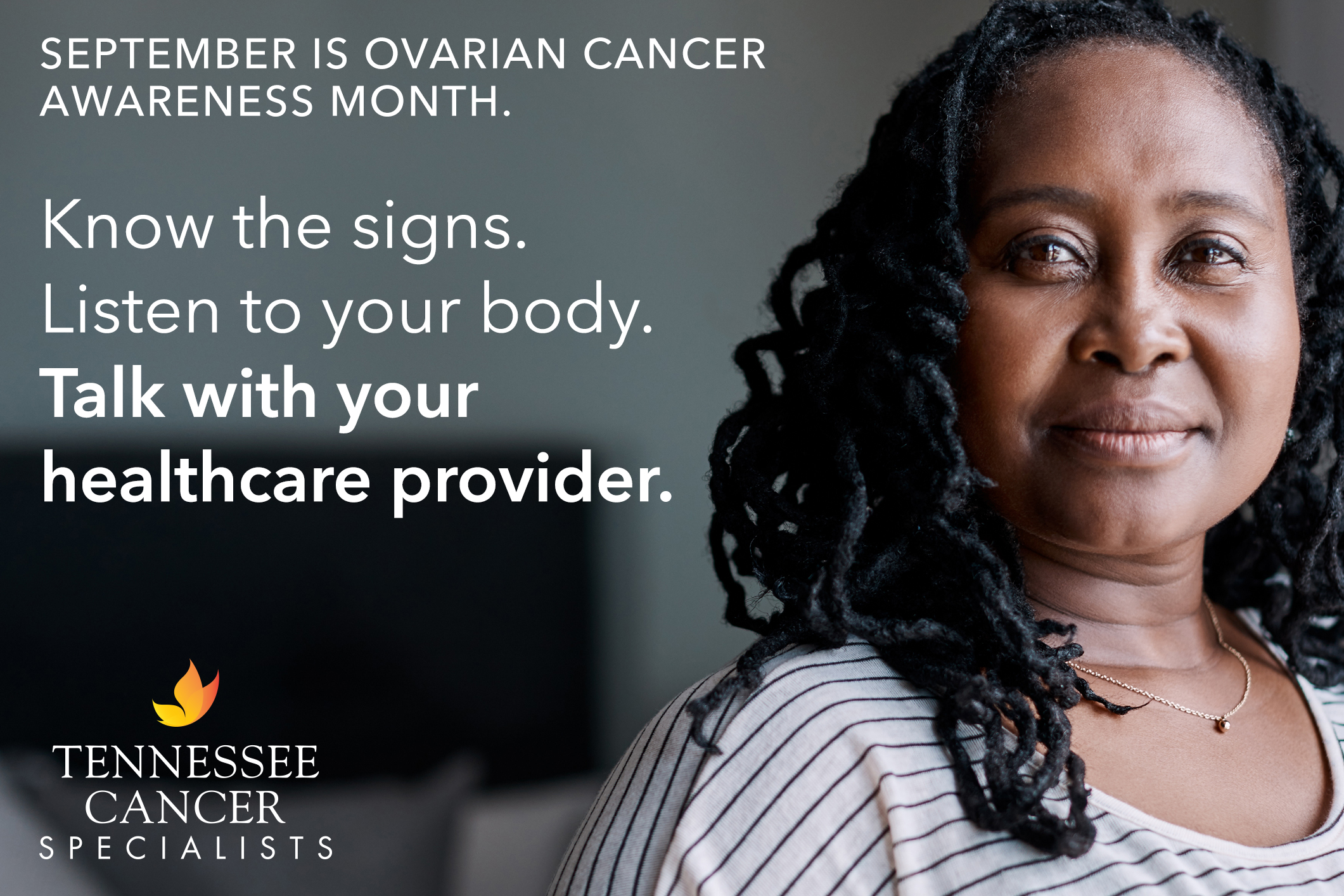 September is Ovarian Cancer Awareness Month, an opportunity to raise awareness about ovarian cancer, recognize potential warning signs and encourage women to understand their personal risk.
Ovarian cancer begins in the ovaries, the reproductive organs that produce eggs and hormones. While ovarian cancer can affect women of any age, the risk generally increases as women get older. Because ovarian cancer can cause symptoms that may be mistaken for other common health conditions, it is important to understand what to watch for and when to talk with a healthcare provider.
At Tennessee Cancer Specialists, our oncology team provides personalized cancer care for patients throughout Northeast Tennessee, including Johnson City, Kingsport and Greeneville. Our goal is to help patients understand their diagnosis, explore their treatment options and receive compassionate care throughout their cancer journey.
What Is Ovarian Cancer?
Ovarian cancer occurs when abnormal cells in or around the ovaries begin to grow uncontrollably. There are several types of ovarian cancer, and treatment can vary depending on the specific type and characteristics of the cancer.
Ovarian cancer may begin in different types of cells, including epithelial cells, which make up the outer surface of the ovary, as well as germ cells and stromal cells.
Some cancers that develop in the fallopian tubes or nearby tissues are also treated as ovarian cancer because they share similar characteristics and treatment approaches.
Understanding the specific type of ovarian cancer is an important first step in determining the most appropriate treatment plan.
Recognizing Ovarian Cancer Symptoms
One of the challenges of ovarian cancer is that its symptoms can be subtle or resemble symptoms caused by other conditions.
Possible ovarian cancer symptoms may include:
- Persistent bloating or abdominal swelling
- Pelvic or abdominal pain
- Feeling full quickly or difficulty eating
- Changes in bowel habits
- Changes in urination, including increased frequency or urgency
- Fatigue
- Back pain
- Changes in menstrual patterns
- Unexplained weight loss or weight gain
Having one or more of these symptoms does not necessarily mean you have ovarian cancer. Many of these symptoms can have other causes.
However, symptoms that are new, persistent or unusual for you should be discussed with your healthcare provider.
What Are the Risk Factors for Ovarian Cancer?
There is no single cause of ovarian cancer. Several factors may increase a woman’s risk of developing the disease.
Potential ovarian cancer risk factors include:
- Age: The risk of ovarian cancer generally increases with age.
- Family history: Having close relatives who have had ovarian, breast or certain other cancers may increase risk.
- Inherited genetic changes: Certain inherited mutations, including changes in the BRCA1 and BRCA2 genes, can increase the risk of ovarian and other cancers.
- Personal history of certain cancers: A personal history of breast, colorectal or endometrial cancer may be associated with an increased risk.
- Hormonal and reproductive factors: Certain reproductive and hormonal factors may influence ovarian cancer risk.
Having a risk factor does not mean you will develop ovarian cancer. If you have a strong family history of cancer or are concerned about your personal risk, talk with your healthcare provider about whether genetic counseling or testing may be appropriate.
Is There a Screening Test for Ovarian Cancer?
Unlike some other cancers, there is no routine screening test recommended for women at average risk who do not have symptoms.
Tests such as transvaginal ultrasound and the CA-125 blood test may sometimes be used when ovarian cancer is suspected or when evaluating women who have certain risk factors. However, these tests are not considered reliable routine screening methods for women at average risk.
This makes awareness of potential symptoms and understanding your individual risk especially important.
Women who have a strong family history of ovarian, breast or related cancers may benefit from discussing their risk with a healthcare provider. Genetic counseling and testing may help identify inherited mutations that can affect cancer risk and treatment decisions.
How Is Ovarian Cancer Diagnosed?
If ovarian cancer is suspected, your healthcare team may recommend several tests to better understand what is happening.
Depending on the situation, diagnostic evaluation may include:
- A physical and pelvic examination
- Imaging tests such as ultrasound, CT or MRI
- Blood tests, including tumor marker testing
- A biopsy or surgical procedure to examine tissue
A diagnosis of ovarian cancer is typically confirmed by examining cells or tissue under a microscope.
Once ovarian cancer is diagnosed, additional testing may be performed to determine the stage and characteristics of the cancer. This information helps your oncology team develop an individualized treatment plan.
Ovarian Cancer Treatment Options
Ovarian cancer treatment depends on several factors, including the type and stage of cancer, genetic and molecular characteristics, overall health and previous treatments.
Treatment may include:
- Surgery to remove cancerous tissue
- Chemotherapy to destroy cancer cells or slow their growth
- Targeted therapy designed to target specific characteristics of cancer cells
- Hormone therapy for certain types of ovarian cancer
- Immunotherapy in select situations
- Clinical trials evaluating new cancer treatments
For many patients, treatment involves a combination of therapies.
Because every cancer diagnosis is different, your oncology team will work with you to determine which treatment options may be most appropriate for your specific situation.
The Importance of Personalized Cancer Care
An ovarian cancer diagnosis can be overwhelming. Patients may have questions about their treatment options, potential side effects, genetic testing, fertility, clinical trials and what to expect during treatment.
At Tennessee Cancer Specialists, we believe cancer care should be personalized to the individual.
Our team considers the specific characteristics of your cancer along with your overall health and personal needs when developing your treatment plan. We are committed to providing comprehensive oncology care while helping patients and their families navigate each step of the cancer journey.
Clinical Trials May Provide Additional Treatment Options
Cancer research continues to lead to new therapies and treatment approaches. For some patients, participating in a clinical trial for ovarian cancer may provide access to promising treatments that are being studied by researchers.
Tennessee Cancer Specialists offers clinical trials through the Sarah Cannon Research Institute (SCRI), one of the world’s leading oncology research organizations.
Clinical trials are not appropriate for every patient, but your oncology team can determine whether a clinical trial may be an option based on your diagnosis, treatment history and individual circumstances.
What Can You Do During Ovarian Cancer Awareness Month?
Ovarian Cancer Awareness Month is a good time to become more familiar with your personal health history and have important conversations with your healthcare provider.
Consider:
- Learning about your family history of cancer
- Paying attention to persistent or unusual symptoms
- Discussing your individual risk factors with your healthcare provider
- Asking whether genetic counseling or testing may be appropriate
- Understanding your options if you receive an ovarian cancer diagnosis
- Supporting friends and family members affected by ovarian cancer
Awareness can be an important first step toward earlier conversations and informed healthcare decisions.
Ovarian Cancer Care in Northeast Tennessee
If you or someone you love has been diagnosed with ovarian cancer, you don’t have to navigate the cancer journey alone.
Tennessee Cancer Specialists provides personalized oncology and hematology care for patients throughout Northeast Tennessee, with locations in Johnson City, Kingsport and Greeneville. Our experienced team is committed to providing comprehensive cancer treatment, compassionate support and access to clinical research when appropriate.
This September, during Ovarian Cancer Awareness Month, take time to learn the signs, understand your risk and talk with your healthcare provider about any concerns.
Knowing your body, understanding your risk and having open conversations with your healthcare team can make a difference.