

Thyroid Cancer Awareness Month: Understanding the Signs, Risk Factors and Treatment Options
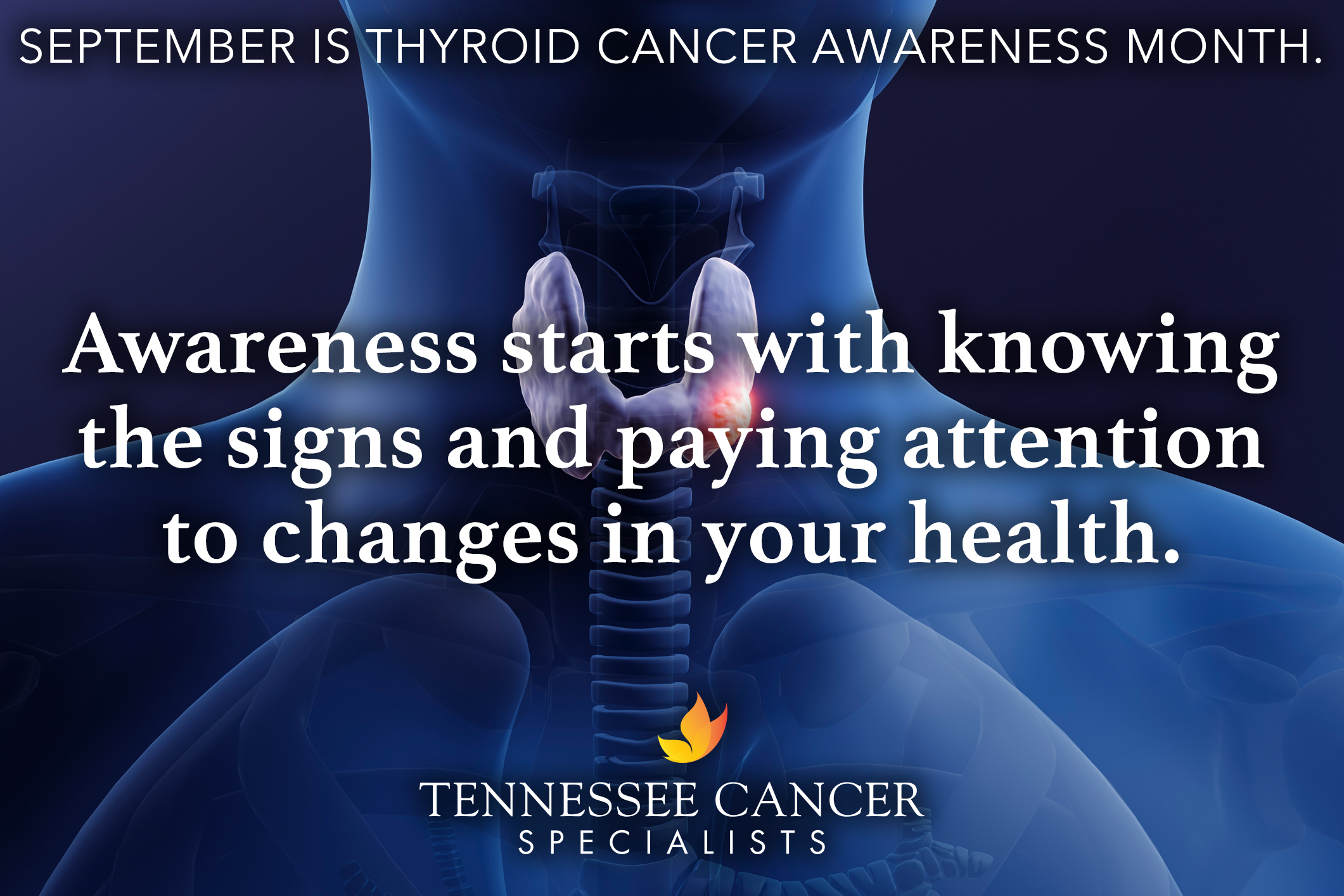 September is Thyroid Cancer Awareness Month, an opportunity to learn more about thyroid cancer, understand potential warning signs and recognize the importance of discussing unusual changes with your healthcare provider.
The thyroid is a small, butterfly-shaped gland located at the front of the neck. Although it is relatively small, the thyroid plays an important role in the body by producing hormones that help regulate metabolism, heart rate, body temperature and other essential functions.
Thyroid cancer occurs when abnormal cells in the thyroid begin to grow uncontrollably. Fortunately, many thyroid cancers can be treated successfully, particularly when they are detected before they spread to other parts of the body.
At Tennessee Cancer Specialists, our oncology team provides personalized cancer care for patients throughout Northeast Tennessee. With locations in Johnson City, Kingsport and Greeneville, our physicians and care teams work with patients to understand their diagnosis and develop individualized treatment plans.
What Is Thyroid Cancer?
Thyroid cancer develops when abnormal cells in the thyroid gland begin growing and multiplying in an uncontrolled way.
There are several types of thyroid cancer. The most common include:
- Papillary thyroid cancer: The most common type of thyroid cancer. It generally grows slowly and can often be treated successfully.
- Follicular thyroid cancer: The second most common type. It can sometimes spread to other parts of the body, including the lungs and bones.
- Medullary thyroid cancer: A less common type that develops from specialized thyroid cells called C cells. Some cases are associated with inherited genetic changes.
- Anaplastic thyroid cancer: A rare and aggressive form of thyroid cancer that can grow and spread quickly.
Because thyroid cancers can behave differently depending on their type, an accurate diagnosis is essential when determining the appropriate treatment approach.
What Are the Symptoms of Thyroid Cancer?
Some thyroid cancers do not cause noticeable symptoms in their early stages. Others may cause changes in the neck or affect nearby structures.
Potential thyroid cancer symptoms include:
- A lump or nodule in the neck
- Swelling in the neck
- Pain in the neck or throat
- Persistent hoarseness or voice changes
- Difficulty swallowing
- Difficulty breathing
- A persistent cough that is not caused by a cold or other illness
- Swollen lymph nodes in the neck
Most thyroid nodules are not cancerous. However, any new or unusual lump or swelling in the neck should be evaluated by a healthcare professional.
What Are the Risk Factors for Thyroid Cancer?
Thyroid cancer can occur in people without any known risk factors. However, certain factors may increase the likelihood of developing the disease.
Potential thyroid cancer risk factors include:
- Radiation exposure: Exposure to high levels of radiation, particularly during childhood, can increase the risk.
- Family history: A family history of thyroid cancer or certain inherited conditions may increase risk.
- Genetic changes: Certain inherited genetic mutations can increase the risk of specific thyroid cancers.
- Age and sex: Thyroid cancer can occur at any age, but certain types are more common in specific age groups and occur more frequently in women.
Understanding your personal and family medical history can help you and your healthcare provider determine whether you may have an increased risk.
How Is Thyroid Cancer Diagnosed?
If a thyroid nodule or other concerning change is discovered, your healthcare provider may recommend additional testing.
Diagnostic evaluation may include:
- A physical examination of the neck
- Ultrasound imaging of the thyroid
- Blood tests to evaluate thyroid function
- Fine-needle aspiration biopsy
- Additional imaging tests when appropriate
- Molecular or genetic testing in certain cases
A thyroid biopsy may be used to determine whether cells within a thyroid nodule are cancerous.
Once thyroid cancer is diagnosed, additional testing may be performed to determine the type, stage and characteristics of the cancer. This information helps your healthcare team determine the most appropriate treatment plan.
Thyroid Cancer Treatment Options
Treatment for thyroid cancer depends on several factors, including the type of thyroid cancer, tumor size, stage, whether the cancer has spread and the patient’s overall health.
Depending on the diagnosis, treatment may include:
- Surgery: Surgery to remove part or all of the thyroid is a common treatment for many thyroid cancers.
- Radioactive iodine therapy: Certain thyroid cancers can be treated with radioactive iodine after surgery.
- External beam radiation therapy: Radiation may be recommended for certain advanced or aggressive thyroid cancers.
- Targeted therapy: Targeted medications may be used for certain advanced thyroid cancers with specific molecular characteristics.
- Chemotherapy: Traditional chemotherapy may be used in select cases, particularly for aggressive or advanced disease.
- Active surveillance: Some small, low-risk thyroid cancers may be monitored closely rather than treated immediately.
- Clinical trials: Eligible patients may have the opportunity to participate in studies evaluating new treatments.
Not every thyroid cancer requires the same approach. Your oncology team will consider the specific characteristics of your cancer when recommending treatment.
The Importance of Personalized Cancer Care
A thyroid cancer diagnosis can raise many questions. Patients may wonder whether they need surgery, what treatment will be necessary, whether the cancer has spread and what life will look like after treatment.
At Tennessee Cancer Specialists, we understand that every cancer diagnosis is unique.
Our physicians and oncology care teams take a personalized approach to treatment, considering the type and characteristics of the cancer along with the patient’s overall health and individual needs.
Our goal is to provide comprehensive cancer care while helping patients understand their diagnosis, treatment options and next steps.
Thyroid Cancer and Clinical Trials
Cancer research continues to advance the way thyroid cancer is diagnosed and treated. For some patients, clinical trials may provide access to new therapies or treatment approaches that are not yet widely available.
Tennessee Cancer Specialists offers clinical trials through the Sarah Cannon Research Institute (SCRI), one of the world’s leading oncology research organizations.
Clinical trials are not appropriate for every patient, but your oncology team can determine whether a clinical trial may be an option based on your diagnosis, treatment history and individual circumstances.
When Should You Talk With Your Doctor?
Many symptoms associated with thyroid cancer can also be caused by noncancerous conditions. A thyroid nodule, for example, does not necessarily mean that cancer is present.
However, you should talk with your healthcare provider if you notice:
- A new lump or swelling in your neck
- A thyroid nodule that is changing
- Persistent hoarseness
- Difficulty swallowing or breathing
- Unexplained swelling of the lymph nodes in your neck
- Persistent neck or throat discomfort
Your healthcare provider can determine whether further evaluation or testing is necessary.
Thyroid Cancer Care in Northeast Tennessee
Thyroid Cancer Awareness Month is a reminder to pay attention to changes in your health and to understand the importance of evaluation when something doesn’t seem right.
While thyroid cancer can be a serious diagnosis, many types of thyroid cancer are highly treatable, particularly when detected early. Advances in cancer research continue to expand treatment options for patients with thyroid cancer.
If you or someone you love has been diagnosed with thyroid cancer, Tennessee Cancer Specialists is here to provide personalized, comprehensive oncology care throughout Northeast Tennessee.
With locations in Knoxville, Johnson City, Kingsport, Greeneville and more cities, our team is committed to providing compassionate cancer care close to home, including access to clinical research when appropriate.
This Thyroid Cancer Awareness Month, take time to learn the signs, understand your risk and talk with your healthcare provider about any changes that concern you.