

Breast Cancer Risk Factors: What You Need to Know
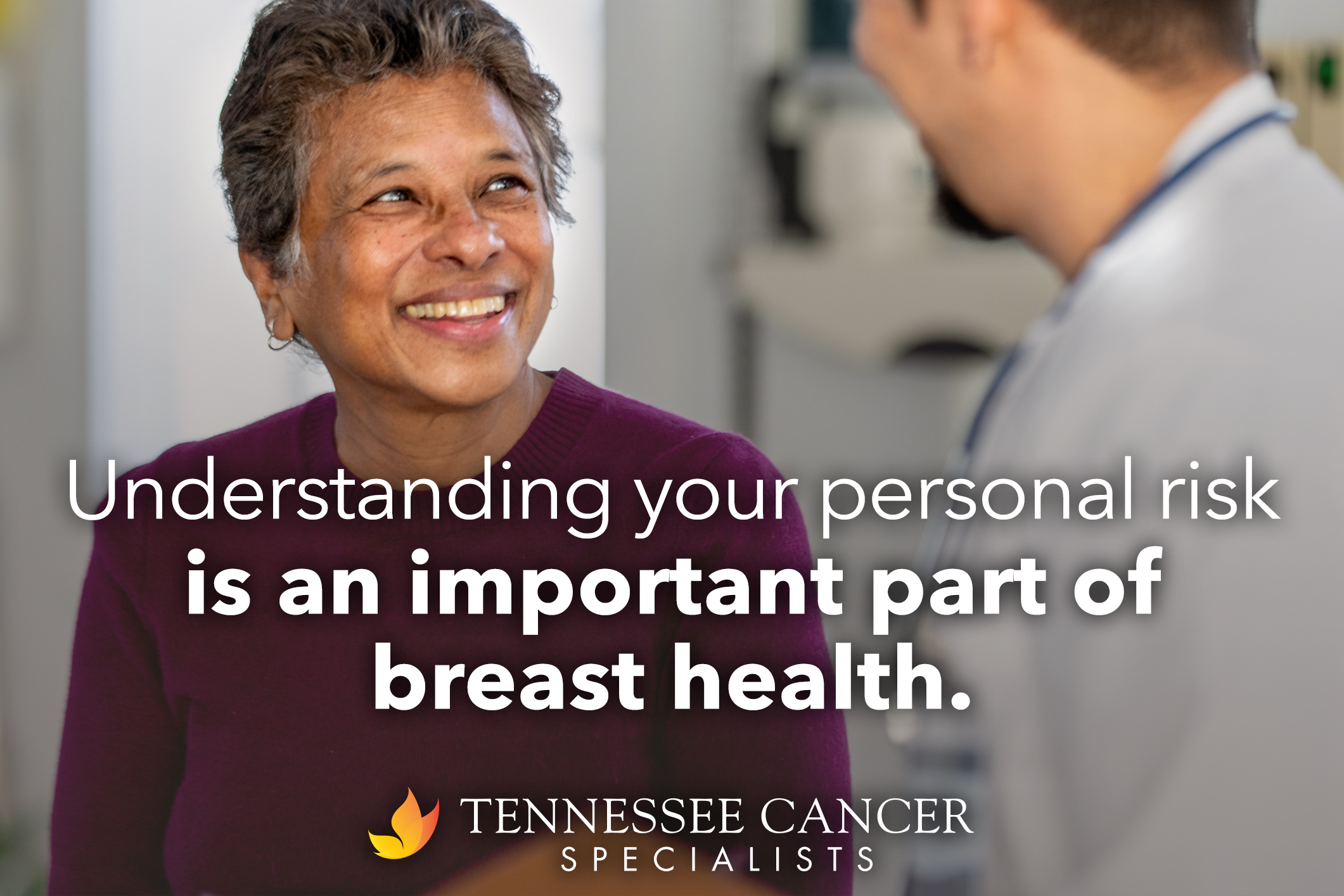 Breast cancer is one of the most common cancers affecting women, and understanding your personal risk can help you make informed decisions about screening and preventive care. While some breast cancer risk factors cannot be changed, knowing which factors apply to you can help you and your healthcare provider determine an appropriate screening plan.
Breast cancer can develop in anyone, including people with no known risk factors. At Tennessee Cancer Specialists, we believe understanding your individual risk is an important part of taking an active role in your health.
What Is a Breast Cancer Risk Factor?
A risk factor is something that may increase a person’s likelihood of developing a particular disease. Having one or more breast cancer risk factors does not mean that you will develop breast cancer.
Some risk factors are related to age, genetics and family history, while others are associated with lifestyle, reproductive history or previous medical treatments.
Some risk factors can be changed, while others cannot.
Age and Breast Cancer Risk
Age is one of the most significant risk factors for breast cancer. The risk of developing breast cancer generally increases as people get older.
Because age is not a modifiable risk factor, regular breast cancer screening becomes increasingly important as you age. Talk with your healthcare provider about when mammograms should begin and how often you should receive them based on your individual risk.
Family History of Breast Cancer
Having close relatives who have had breast cancer can increase your risk.
Your risk may be affected by:
- A mother, sister or daughter with breast cancer
- Multiple relatives with breast or ovarian cancer
- A relative diagnosed with breast cancer at a younger age
- A male relative with breast cancer
- A family history of certain other cancers
However, most women who develop breast cancer do not have a strong family history of the disease.
If you have a significant family history of breast or ovarian cancer, talk with your healthcare provider about whether genetic counseling may be appropriate.
Genetic Mutations and Breast Cancer
Some breast cancers are associated with inherited genetic changes.
BRCA1 and BRCA2 are two of the best-known genes associated with increased breast cancer risk. Other inherited genetic changes may also increase the risk of breast, ovarian and other cancers.
Genetic testing is not necessary for everyone. Your healthcare provider or a genetic counselor can help determine whether your personal or family history suggests that genetic counseling or testing may be appropriate.
Knowing that you carry a specific inherited genetic mutation can also help inform conversations about cancer screening and risk-reduction strategies.
Personal History of Breast Cancer
If you have previously had breast cancer, you may have an increased risk of developing another breast cancer.
A history of certain noncancerous breast conditions can also affect breast cancer risk. Some abnormal breast tissue changes, particularly certain types of atypical hyperplasia, are associated with an increased risk.
Your healthcare provider can help you understand how your individual breast history affects your screening needs.
Dense Breast Tissue
Breast density describes the amount of fibrous and glandular tissue compared with fatty tissue in the breasts.
Dense breasts are common and are not a disease. However, having dense breast tissue can make some breast cancers more difficult to see on a mammogram. Dense breast tissue is also associated with an increased risk of developing breast cancer.
Depending on your individual risk and breast density, your healthcare provider may discuss whether additional imaging or a different screening approach is appropriate.
Previous Radiation Treatment
Women who received radiation therapy to the chest, particularly at a younger age, may have an increased risk of breast cancer later in life.
For example, radiation used to treat certain cancers during childhood or young adulthood can affect future breast cancer risk.
If you have received radiation treatment to the chest, tell your healthcare provider so your breast cancer screening plan can take your history into account.
Reproductive and Hormonal Factors
Some reproductive and hormonal factors may affect breast cancer risk.
Factors that can influence risk include:
- Starting menstrual periods at a younger age
- Beginning menopause at an older age
- Having a first pregnancy at an older age
- Never having been pregnant
- Certain types of hormone therapy after menopause
These factors are associated with breast cancer risk in different ways, and individual circumstances vary.
Talk with your healthcare provider if you have questions about how your reproductive or hormonal history may affect your risk.
Lifestyle Factors and Breast Cancer Risk
Some lifestyle factors may also influence breast cancer risk.
Factors associated with an increased risk can include:
- Drinking alcohol
- Physical inactivity
- Being overweight or obese, particularly after menopause
Making healthy lifestyle choices may help reduce the risk of breast cancer and other chronic health conditions.
Regular physical activity, maintaining a healthy weight and limiting alcohol consumption are steps that can contribute to overall health.
However, lifestyle changes cannot eliminate breast cancer risk.
Can Breast Cancer Be Prevented?
There is no guaranteed way to prevent breast cancer.
Some risk factors, such as age, family history and inherited genetic changes, cannot be changed. Other factors may be modified through lifestyle choices or medical care.
For people at significantly increased risk, healthcare providers may discuss additional strategies for reducing risk. Depending on the individual’s circumstances, these may include enhanced screening, medications that reduce breast cancer risk or preventive surgery.
These decisions are highly personal and should be discussed with a qualified healthcare provider.
Know Your Family History
One of the most useful things you can do to better understand your breast cancer risk is to learn your family history.
When possible, find out which relatives have had cancer, what type of cancer they had and approximately how old they were when diagnosed.
A pattern of breast, ovarian, pancreatic or prostate cancers in a family may be important information for your healthcare provider.
If your family history raises concerns, genetic counseling may help you better understand your potential inherited risk.
Breast Cancer Screening and Risk Assessment
Understanding your risk can help you and your healthcare provider determine the most appropriate breast cancer screening plan.
For many women, mammography is an important screening tool. Women with higher-than-average risk may need to begin screening earlier or receive additional imaging, such as breast MRI.
Your screening recommendations should take into account factors such as:
- Age
- Family history
- Personal history
- Breast density
- Genetic risk
- Previous radiation treatment
- Other individual risk factors
If you are unsure about your breast cancer risk or when you should receive your next mammogram, talk with your healthcare provider.
What If You Don’t Have Any Known Risk Factors?
It is important to remember that having no known risk factors does not mean you cannot develop breast cancer.
Many people diagnosed with breast cancer do not have a strong family history or an identifiable genetic mutation.
That’s why following recommended screening guidelines and being aware of changes in your breasts remain important, even if you believe you are at average risk.
Contact your healthcare provider if you notice a new lump, changes in breast size or shape, skin dimpling, nipple changes, unusual discharge or another persistent change.
Personalized Breast Cancer Care at Tennessee Cancer Specialists
Understanding your breast cancer risk is an important step, but it is only one part of maintaining your health.
If you are diagnosed with breast cancer, Tennessee Cancer Specialists provides personalized oncology care throughout Northeast Tennessee, with locations in Knoxville Johnson City, Kingsport and Greeneville and more cities.
Our oncology team considers the specific characteristics of each patient’s cancer, personal health history and individual needs when developing a treatment plan. Depending on the diagnosis, treatment may include surgery, radiation therapy, chemotherapy, hormone therapy, targeted therapy, immunotherapy or clinical trials.
Tennessee Cancer Specialists also offers access to clinical trials through the Sarah Cannon Research Institute (SCRI), one of the world’s leading oncology research organizations.
Take Control of What You Can
Not every breast cancer risk factor can be changed, but understanding your risk can help you make informed decisions about screening and preventive care.
Talk with your healthcare provider about your family history, personal health history and individual risk factors. If you are due for a mammogram, make screening part of your regular healthcare routine.
Knowing your risk is an important first step toward taking an active role in your breast health.