

Breast Cancer Screening: What You Need to Know About Mammograms and Early Detection
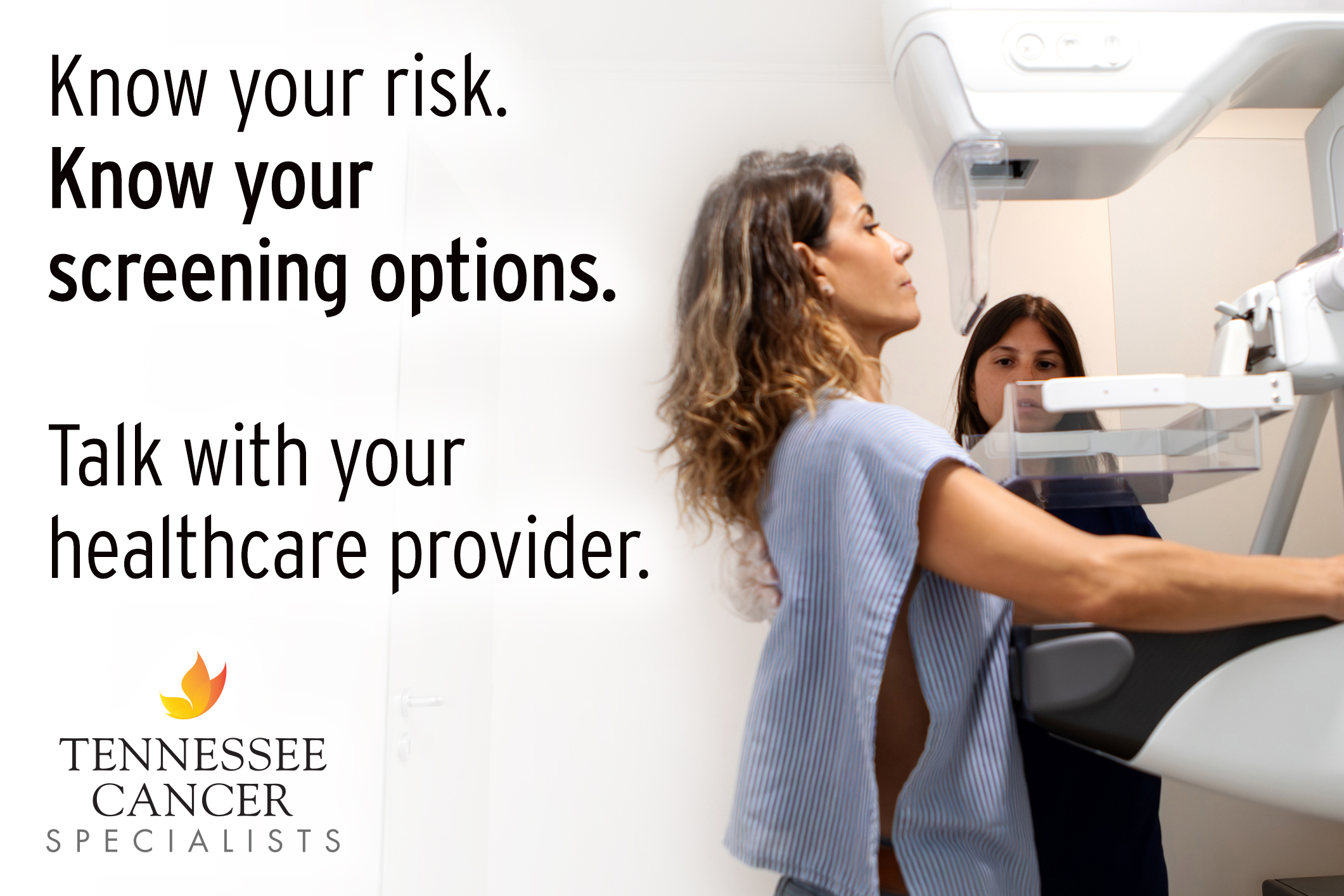 Breast cancer screening plays an important role in women’s health. Regular screening can help detect breast cancer before symptoms develop, when treatment may be more effective.
For many women, mammograms are the primary screening tool used to detect breast cancer. However, the appropriate screening schedule can vary depending on age, family history, personal health history and other risk factors.
At Tennessee Cancer Specialists, we encourage women to understand their individual breast cancer risk and talk with their healthcare provider about an appropriate screening plan.
What Is Breast Cancer Screening?
Breast cancer screening involves checking for signs of breast cancer in women who do not have symptoms.
The primary screening method is a mammogram, which uses low-dose X-rays to create images of breast tissue. Mammograms can identify some breast cancers and other breast changes before they can be felt during a physical examination.
Screening is different from diagnostic breast imaging. Screening is performed when there are no concerning symptoms, while diagnostic imaging may be recommended when a woman has a breast lump, nipple changes, pain or another abnormal finding.
When Should You Start Getting Mammograms?
Breast cancer screening recommendations can vary among organizations and may change as research continues. Your appropriate screening schedule depends on factors such as your age and individual risk.
Women at average risk should talk with their healthcare provider about when to begin regular mammograms and how frequently they should be performed.
Women with a higher-than-average risk of breast cancer may need to begin screening earlier or receive additional screening, such as breast MRI, depending on their individual circumstances.
Risk factors that may affect screening recommendations include:
- A strong family history of breast or ovarian cancer
- Certain inherited genetic mutations, including BRCA1 and BRCA2
- A personal history of breast cancer
- Previous radiation treatment to the chest
- Certain breast conditions
- Other factors that increase breast cancer risk
If you are unsure about your breast cancer risk, talk with your healthcare provider. Understanding your risk can help determine which screening approach may be appropriate.
Why Are Mammograms Important?
One of the most important benefits of mammography is the ability to identify some breast cancers before they cause noticeable symptoms.
Early detection can provide more opportunities for treatment and may allow some cancers to be treated before they spread.
However, mammograms are not perfect. Some breast cancers may not be visible on a mammogram, and mammograms can sometimes identify an abnormality that ultimately turns out not to be cancer.
For these reasons, screening should be considered as one part of a broader approach to breast health.
What Happens During a Mammogram?
During a mammogram, each breast is positioned between two plates. The breast is gently compressed while X-ray images are taken.
Compression may be uncomfortable for some women, but it generally lasts only a short time.
A radiologist reviews the images and looks for abnormalities that may require additional evaluation.
If your mammogram is normal, your healthcare provider will generally recommend continuing screening according to your individual screening schedule.
If an abnormality is identified, additional testing may be recommended.
What Happens After an Abnormal Mammogram?
An abnormal mammogram does not automatically mean you have breast cancer.
Additional evaluation may include:
- Additional mammogram images
- Breast ultrasound
- Breast MRI
- Follow-up imaging
- A breast biopsy
A biopsy may be recommended if imaging identifies an area that needs further evaluation. During a biopsy, a small sample of tissue is removed and examined by a pathologist.
Many abnormal mammogram findings are ultimately determined to be benign.
What About Breast Self-Awareness?
Although routine breast self-exams are not generally recommended as a stand-alone screening method, being familiar with how your breasts normally look and feel can help you recognize changes.
Contact your healthcare provider if you notice:
- A new lump in the breast or underarm
- A change in breast size or shape
- Skin dimpling
- Redness, scaling or thickening of the skin
- Nipple changes
- Nipple discharge that is unusual for you
- Persistent breast pain or another new change
These symptoms do not necessarily indicate breast cancer. However, new or persistent changes should be evaluated.
Do Women With Dense Breasts Need Additional Screening?
Breast density refers to the amount of fibrous and glandular tissue compared with fatty tissue in the breast.
Dense breast tissue is common and is not itself a disease. However, dense breasts can make some cancers more difficult to see on a mammogram and are also associated with an increased risk of breast cancer.
Depending on your individual risk and breast density, your healthcare provider may discuss whether additional imaging is appropriate.
Can Men Get Breast Cancer?
Yes. Although breast cancer is much more common in women, men can also develop breast cancer.
Men should talk with a healthcare provider about any unusual breast changes, including a new lump, nipple discharge, changes in the skin or changes around the nipple.
Routine mammography screening is not generally recommended for men at average risk, but men with certain risk factors may need individualized evaluation.
What Can Increase Your Risk of Breast Cancer?
Understanding your breast cancer risk is an important part of making informed screening decisions.
Risk factors may include:
- Increasing age
- A personal history of breast cancer
- Family history of breast or ovarian cancer
- Certain inherited genetic mutations
- Dense breast tissue
- Previous radiation exposure to the chest
- Certain reproductive and hormonal factors
- Alcohol consumption
- Being overweight or obese after menopause
- Physical inactivity
Having a risk factor does not mean you will develop breast cancer, and some people diagnosed with breast cancer have no known risk factors.
Genetic Testing and Breast Cancer Risk
Some breast cancers are associated with inherited genetic changes. BRCA1 and BRCA2 are among the best-known genes associated with an increased risk of breast and ovarian cancers.
Genetic counseling may be appropriate for some individuals based on their personal and family history.
If you have multiple relatives who have had breast or ovarian cancer, a family history of breast cancer at a young age or other concerning patterns of cancer, talk with your healthcare provider about whether genetic counseling or testing may be appropriate.
Breast Cancer Screening Is an Individual Decision
There is no single screening schedule that is right for every woman.
Your healthcare provider can help you determine when to begin mammograms and how frequently you should be screened based on your age, personal history, family history and other risk factors.
The most important step is to have the conversation.
If you have missed a recommended mammogram or are unsure whether you are due for screening, talk with your healthcare provider about your next steps.
Breast Cancer Care at Tennessee Cancer Specialists
A mammogram can be an important first step in detecting breast cancer, but screening is only one part of the cancer care journey.
If an abnormality is discovered and breast cancer is diagnosed, Tennessee Cancer Specialists provides personalized oncology care for patients throughout Northeast Tennessee, with locations in Knoxville, Johnson City, Kingsport and Greeneville and more cities.
Our physicians and oncology care teams consider the specific characteristics of each patient’s cancer when developing a treatment plan. Depending on the diagnosis, treatment may include surgery, radiation therapy, chemotherapy, hormone therapy, targeted therapy, immunotherapy or clinical trials.
Tennessee Cancer Specialists also offers access to clinical trials through the Sarah Cannon Research Institute (SCRI), one of the world’s leading oncology research organizations.
Make Breast Cancer Screening Part of Your Health Routine
Breast cancer screening is an important part of preventive healthcare. Regular mammograms can help identify some breast cancers before they cause symptoms, while understanding your personal risk can help determine whether additional screening may be appropriate.
If you are due for a mammogram, don’t put it off. Talk with your healthcare provider about the screening schedule that is right for you.
Early detection, informed decisions and personalized care can make an important difference in the breast cancer journey.